Land Rover is a powerful vehicle that is built to ride on rough roads, long journeys, and daily driving. Still, with time, its engine and other parts wear down and need proper maintenance. If you skip the minor issues, they can save the life of your SUV and cost you a lot. But you need a few regular checks to keep the thing running smoothly.
If you want to get the best maintenance result, consult a Jaguar Land Rover specialist. They always ensure that your vehicle gets professional care and stays in the best condition.
Why Regular Maintenance is Important
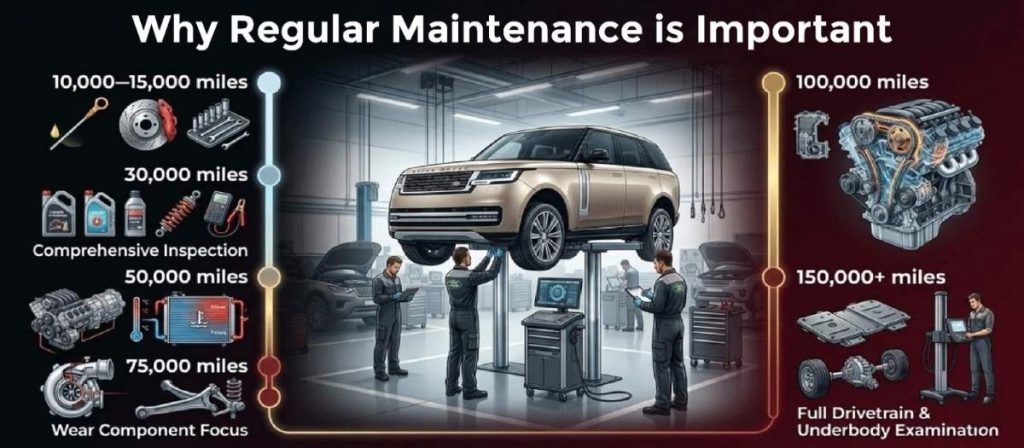
Regular maintenance is necessary to prevent the breakdown, protect the engine, SUV handling, and safety. Land Rover engines, brakes, suspension, and other parts wear over time with the different weather conditions and handling.
For the best maintenance result, you need a good Jaguar Land Rover service. They have a certified mechanics team, who find out the errors early, and repair with precision to keep your vehicle efficient, safe, and reliable in the long term.
1. Engine Oil & Filter
Regularly checking your vehicle’s engine oil is the best way to keep your engine protected from wear or overheating. Oil is important to keep your engine parts cool and lubricated to ensure smooth operations and prevent damage.
How to Check:
Make sure to check the dipstick in the hot water, especially. If the oil is color is dark, fill it with the 5W-30 synthetic oil.
Service Schedule:
Remember the oil change and filter, make sure to change it after every 7,500 miles or every 6 months.
Why it Matters:
If you do not follow the schedule of oil maintenance, it can lead to overheating, turbo damage, and costly rebuilds. Regular checks and maintenance help keep your Land Rover at its peak.
2. Brakes for Safety System
Land Rover is a heavy car and needs proper maintenance. Brakes are the most important part; worn brakes reduce the stopping power, mostly in the rain.
Look for:
You must check the vibrations, squeaking, and the longer stopping distance.
Routine:
You need to inspect the pads after every 15000 miles and replace it to find they are below 3mm. Also, change the brake fluid every 2 years.
Why it matters:
To keep the brakes safe and preventively costly rotor repair and damage,
3. Air Suspension
Air suspension is used in the Range Rover and Discovery models for comfort. Time, dust, and age cause leaks. If this happens, you need to take the help of a Jaguar and Land Rover specialist.
Check monthly:
Check out the park on level ground. If you see one side sitting low, there might be a leak or compressor issue.
Maintenance:
The airbag must be replaced around 80,000 miles to avoid sudden failure.
Why it matters:
Because a small leak today can lead to £500+ compressor failure later.
4. Tyres
Tyres are the most important part of your luxury vehicle. They affect the fuel economy, safety, comfort, and traction.
Routine:
- You need to check the pressure of the tyre monthly. Use the PSU guide on the door frame.
- Rotates the types after every 10,000 miles driven.
- Replace the trade if it gets below 3mm.
Why it matters:
It needs to be maintained because the pressure saves fuel and improves the handling in wet conditions.
5. Coolant
Coolant plays a crucial role in maintaining your Land Rover’s engine temperature. If the coolant level drops or becomes contaminated, the engine can overheat, leading to serious issues like warped heads or blown gaskets.
Routine:
- Check the coolant level weekly when the engine is completely cold.
- Make sure it stays between the MIN and MAX marks.
- Flush and replace the coolant every 5 years or 100,000 miles, whichever comes first.
Why it matters:
Low or dirty coolant is one of the biggest causes of overheating, which can lead to severe engine damage and costly repairs.
6. Battery & Charging System
The Land Rover engine has to work harder than you think. In the cold UK mornings, the vehicle’s heavy electrical load can drain the power faster. By keeping your battery and charging system in good condition, you can prevent them from unexpected errors.
Routine:
- Monthly, analyse the battery terminals.
- Test the battery voltage; it must be 12.6V or higher when fully charged.
- Replace the battery every 4 years to maintain optimal performance.
Why it matters:
A weak battery puts extra strain on the alternator, reduces starting power, and can trigger electrical faults. Proper maintenance ensures smooth performance and protects expensive charging components.
7. Air Filters
In a Land Rover, the air filter plays a major role in keeping your engine breathing clear air. Dusty area, clogs quickly, and reduces the power and fuel economy.
Routine:
- Clean the air filter every month and replace it every 20,000 miles.
- Replace the cabin air filter once a year to keep the interior air fresh.
Why it matters:
A clean filter helps to accelerate smoothly and ensure the healthier, cleaner air inside your cabin.
8. Transmission & Differential Fluids
Clean transmission and differential fluid are very important for smooth gear changes. When these fluids age or get contaminated, the gearbox has to work harder, which affects the performance and comfort.
Routine:
- Check out the transmission fluid at 30,000 miles.
- Analyse differential fluid at 30,000 miles.
- Replace both fluids at 60,000 miles to maintain smooth operation.
Why it matters:
Clean fluids prevent internal wear, reduce heat, and protect the gearbox from expensive long-term damage.
9. Belts, Hoses & Software Updates
Mostly, the Land Rover performance issue looks minor, but they have very important components like worn belts, outdated software, or cracked hoses. These apartments look small, but when they fail cause major issues and expensive repairs.
Routine:
- Make sure to check the belts and hoses monthly for cracks, fraying, or stiffness.
- Keep all the software of the vehicle updated during regular service to fix bugs and improve performance.
Why it matters:
If you stay updated, it prevents you from unexpected breakdowns, protects the engine, and keeps your Land Rover running fast and at its best performance.
10. Underbody Rust & Lights
UK wet weather, salted winter roads, and muddy paths slowly damage your Land Rover’s underbody. It causes rust, which usually starts from a small area, but if you ignore it, it spreads very quickly and affects the vehicle’s power.
Routine
- Make sure all the lights (headlight, indicator, and brake light) are working properly
- Replace the dim or dead bulb immediately; good visibility keeps you safe on the roads.
- Apply a professional rust protection layer once a year.
- This coating protects the suspension arm, floor panel, and fuel line from corrosion.
Why it matters:
Rust spreads very fast and weakens the internal parts, which leads to expensive repairs.
Recommended Land Rover Maintenance Timeline by Mileage:
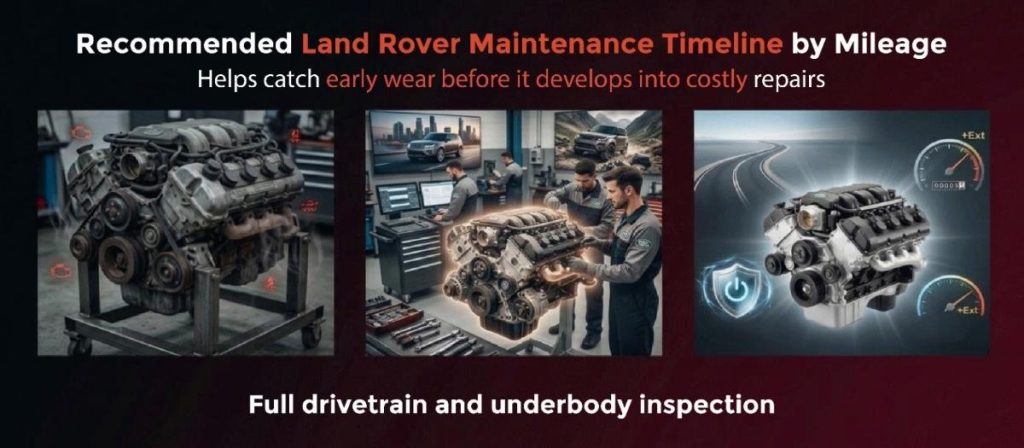
| Mileage Interval | Recommended Maintenance Focus | Why It Matters for Long-Term Reliability |
| 10,000–15,000 Miles | Basic servicing, oil changes, brake inspections | Helps catch early wear before it develops into costly repairs |
| 30,000 Miles | Fluid inspections, suspension checks, battery testing | Ensures key systems continue performing efficiently |
| 50,000 Miles | Transmission assessment, cooling system inspection | Prevents mid-life drivetrain and overheating issues |
| 75,000 Miles | Suspension component review, turbo system inspection | An important stage where many wear-related faults begin to appear |
| 100,000 Miles | Comprehensive engine health check, timing system review | High-mileage engines need closer monitoring to avoid major failures |
| 150,000+ Miles | Full drivetrain and underbody inspection | Essential for preserving reliability in ageing Land Rovers |
High-Mileage Bonus Tips
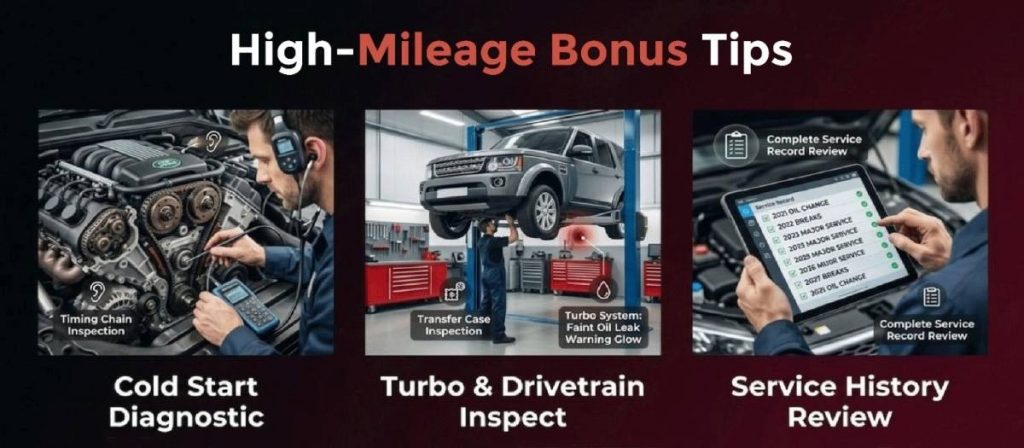
Here are some of the most effective high-mileage bonus tips:
- Water the timing chains and notice the noise on cold starts
- Notice if there are any turbo oil lines for leaks.
- Check out the transfer case if you hear clunks when tuning.
- Track the full service record; this will increase the resale value significantly.
Final Thoughts
Regular maintenance keeps your Land Rover running smoothly, which protects your engine and saves on repairs and rescues the cost of repair. The maintenance checks help you to avoid major breakdowns and keep your SUV performing at its peak.
To get the best speed and optimal result, you need to have your Land Rover serviced by a Jaguar Land Rover specialist. They have a team of experts to spot the issues easily and keep your vehicle in the best condition for years.
Whether you have a Range Rover, Discovery, or Defender, proper service can easily extend the years of reliable performance in your car.
FAQs
How often should I service my Land Rover?
Every 10,000 miles or 12 months, more frequently in dusty or hot conditions.
Is an indie garage better than a dealer?
Yes, and Indle garage is better because independent JLR specialists offer the same OEM parts at a lower cost.
Can I do brake pads myself?
Yes, you can, but the brake fluid bleeding requires proper tools.
Do these checks apply to every Land Rover model?
Yes, these checks are for every Land Rover Model. However, some of the specifications vary, but the maintenance essentials stay the same.