

Discovery Sport engines perform well in cold weather only if they are properly cared for, because the winter season is very harsh on engines and cannot be taken lightly.
Even the most well-engineered vehicles’ engines face common issues like thickened oil, reduced fuel efficiency, freezing, battery strain, and diesel gelling. All these combine to give the engine the hardest time in cold weather.
So, for those who own a Land Rover Discovery Sport in the UK, it is a very real and valid question to ask how reliably the Discovery Sport engines cope with harsh winter conditions. Especially for those who live in Scotland, high altitudes, rural areas, or in such regions that regularly face snow and frost, this is a big concern.
At Jaguar Land Rover Engine Specialists, we have dealt with many Discovery Sport engines that suffered from winter-related failures, poor maintenance practices, and long-term cold-weather wear. The thing is, all these winter-related effects only show up when the temperature drops, so by the time the owner realises the issue, quite a bit of time has already been wasted.
When the owners know how their vehicle’s engine is supposed to behave in cold climates, they can save themselves from expensive damage and improve the long-term reliability of their car. In this blog, we will tackle this topic in detail by discussing how cold weather affects engines and how engines in the Land Rover Discovery Sport react to cold weather.
Why Is Cold Weather So Challenging For Engines?
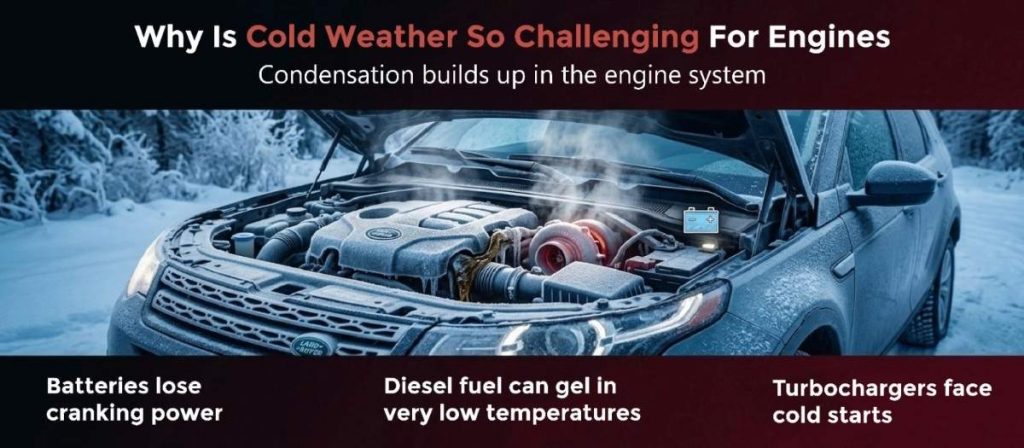
Cold weather is harsh and challenging for all engines, especially for relatively modern engines. We need to understand why winter is so punishing for engines, and then we will specifically talk about Discovery Sport engines.
Here’s how problems occur in the cold weather:
- Batteries lose cranking power
- Diesel fuel can gel in very low temperatures
- Engine oil thickens, reducing lubrication at startup
- Short journeys prevent proper engine warmup
- Condensation builds up in the engine system
- Turbochargers face additional stress during cold starts
There is no doubt that modern engines are efficient, but it is also undeniable that they are more complex, tighter-tolerance machines. In other words, modern engines are not very forgiving if they are constantly being subjected to improper winter usage and repeated cold starts. Opting for Jaguar Engine Replacement as a result of winter-related engine problems is the right choice.
Which Engines are in the Land Rover Discovery Sport?
The Discovery Sport commonly has 2.0L Ingenium petrol engines, 2.0L Ingenium diesel engines, and, in newer models, there are mild hybrid and hybrid variations. These Ingenium engines are engineered with emissions compliance and efficiency in mind.
So even though they are technically very advanced, they are also very sensitive to driving habits and maintenance quality, especially in winter. Learn The Most Reliable Engine For Land Rover, here.
Cold Start Behavior Of Discovery Sport Engines:
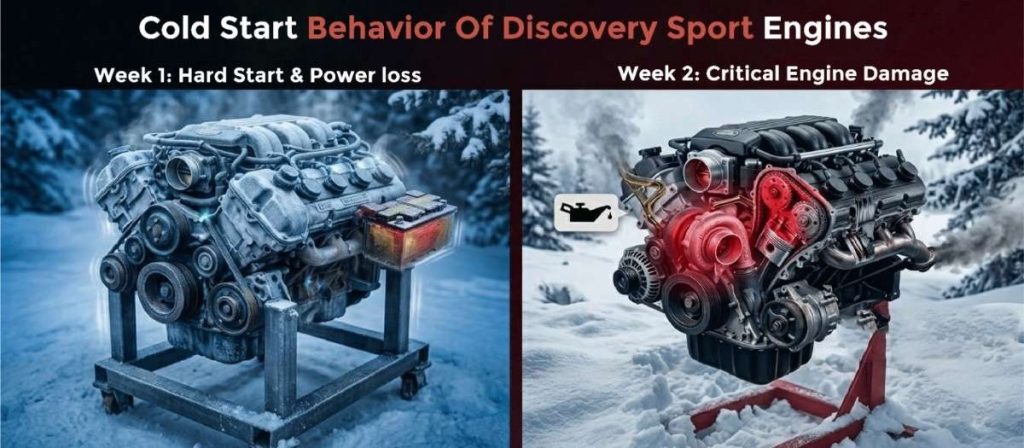
To understand how an engine is going to handle winter, we need to note how it behaves during a cold start. Usually, Discovery Sport engines perform well in cold weather because of advanced fuel injection timing, modern glow plug systems, and intelligent engine management software. So when do problems begin? The problems start when the oil is not of the correct grade, the vehicle is used for short trips only, the battery is weak, the engine is revved hard before warming up, etc.
This is the point where a lot of owners unknowingly start causing damage to their engines. When the Discovery Sport faces repeated cold starts without proper warm-ups, it results in increased internal friction, timing chain stress, turbocharger wear, and premature engine component wear.
When some time passes by without these issues being treated properly, you will experience rattling noises, oil consumption, loss of power, and in extreme cases, the engine can fail completely.
Diesel Discovery Sport In Freezing Conditions:
Diesel engines face relatively more challenges in winter. Combustion becomes less efficient, diesel fuel thickens, DPF regeneration struggles, and EGR system contamination increases in very low temperatures. Many owners make frequent short journeys in the cold weather, which makes the Discovery Sport diesel engines very prone to DPF and EGR issues.
This happens because in a short journey in cold weather, the engine does not get enough time to reach proper operating temperature. All this results in excess soot buildup, limp mode activation, DPF blockages, and engine warning lights. These are very common winter complaints that we see when owners come to us for Land Rover Engine Replacement.
Oil Viscosity Is A Huge Problem:
An incorrect oil engine is one of the biggest silent issues. The oil thickens in cold weather, and so the lubrication during startup becomes poor when the exact specified oil for Ingenium engines is not used. This causes issues like timing chain wear, bearing stress, turbo wear, and camshaft damage.
A lot of general garages often opt to use “close enough” oil grades, but not us. Because we know that for Discovery Sport engines, close enough is not good enough in winter.
Turbocharger Stress In Winter:
From cold start driving habits, the engines that suffer the most are the Discovery Sport’s turbocharged engines. Drivers usually start the engine and drive at speed immediately. As a result, the metal expands unevenly, cold oil fails to protect the turbo bearings, and long-term turbo damage occurs. This is the reason why turbo failures are very common after the winter season ends.
Condensation And Internal Moisture:
During cold weather, condensation inside the engine system is very common, especially if you use the vehicle for short trips only. It causes increased contamination of EGR and intake systems, sludge formation in oil, and corrosion inside engine components. When several winters pass with this problem, it affects the engine’s life significantly.
Why Do Some Discovery Sport Engines Fail After Winter?
Often, we see a case where the owner says their car’s engine was fine before winter but developed issues afterwards. The truth is, the engine was not fine before winter, and the cold weather actually exposed things like worn turbos, oil starvation damages, poor maintenance history, weak timing chains, DPF/EGR systems overload, etc.
Cold weather does not totally cause these problems alone; sometimes it reveals the already existing underlying issues.
How Can Owners Improve Winter Performance?
If you treat your Discovery Sport engine the right way, it will perform exceptionally well even in cold climates. Here’s how you can do it:
- Use the exact manufacturer-specified oil
- Keep battery health checked before winter
- Drive gently until fully warm
- Allow 60-90 seconds of idle time after start
- Avoid short journeys when possible
- Take the vehicle for longer drives to support DPF regeneration
One thing to remember is that most of the time, engine issues are not because of any design flaw at all, but because of usage habits. When you improve those habits, you automatically increase the reliability of your engine.
Jaguar Land Rover Engine Specialists Ensure Long-Term Engine Reliability:
For all your Maintenance and tune-up needs, Jaguar Land Rover Engine Specialists is here for you. It is very common for us to see the long-term effects of cold weather misuse, and as specialists in the Discovery Sport engine, we ensure Diagnostic Expertise to start the right treatment for your car’s engine.
Our experts know how Ingenium engines respond to winter stress from DPF complications and timing chain wear to turbocharger strain. With our years of experience with Jaguar Land Rover cars, we determine whether the winter damage to your car’s engine is reversible or if the safer and more reliable solution is Engine Rebuild and Repair.
Our precision processes, Quality Assurance, model-specific knowledge, commitment to long-term reliability, and Competitive Pricing are a few of the many good qualities that set us apart from other general garages. We ensure long-term, reliable results instead of giving you temporary fixes that will fail by the time next winter season arrives.
Do Discovery Sport Engines Perform Well In Cold Weather?
Yes, they can, but only if you maintain and drive them correctly. The engine design itself is capable of handling winter conditions in the UK. The issues arise from poor oil choice, lack of winter preparation, driving habits, and incorrect servicing. If you properly care for the engines it will cope very well with freezing conditions.
What Are Some Signs That The Discovery Sport Engine Is Struggling After Winter?
Watch out for common signs like:
- Rough Idling When Cold
- Turbo Whistling
- Loss Of Power
- Increased Oil Consumption
- Rattling Noise On Startup
- DPF Warning Lights
If you experience any of these, it is an early sign that the winter stress has gotten to the engine, and you should head over to Range Rover Engine Replacement specialists.
Conclusion:
The Land Rover Discovery Sport is designed to handle UK winters, but since its Ingenium engines are very sophisticated, they demand proper care during cold weather. You will experience long-term engine wear because of short journeys, cold starts, incorrect oil, and weak batteries in the winter season. And the more stressful part is that these things become more visible after the winter has already passed.
It is important to know how winter will affect your engine so that you can take proper care of it and improve your driving habits. This will add years to your engine’s life. In case your Discovery Sport engine is showing signs of post-winter stress, Jaguar Land Rover Engine Specialists is here to provide a specialist diagnosis and the right solution that ensures long-term reliability.
FAQs:
How long should you warm up the Discovery Sport in winter?
For at least 60 to 90 seconds before moving the car, always drive gently for the first few minutes.
Does winter cause turbo failure in Discovery Sport engines?
Yes, turbo failure is a very common issue that drivers face in the winter season. Especially if you drive hard before warming up, you will definitely face turbo failure.
Which engine, diesel or petrol, is better during winter in the Discovery Sport?
Diesel needs longer drives for DPF health, while petrol handles short winter trips relatively better.